Server-Side Tagging
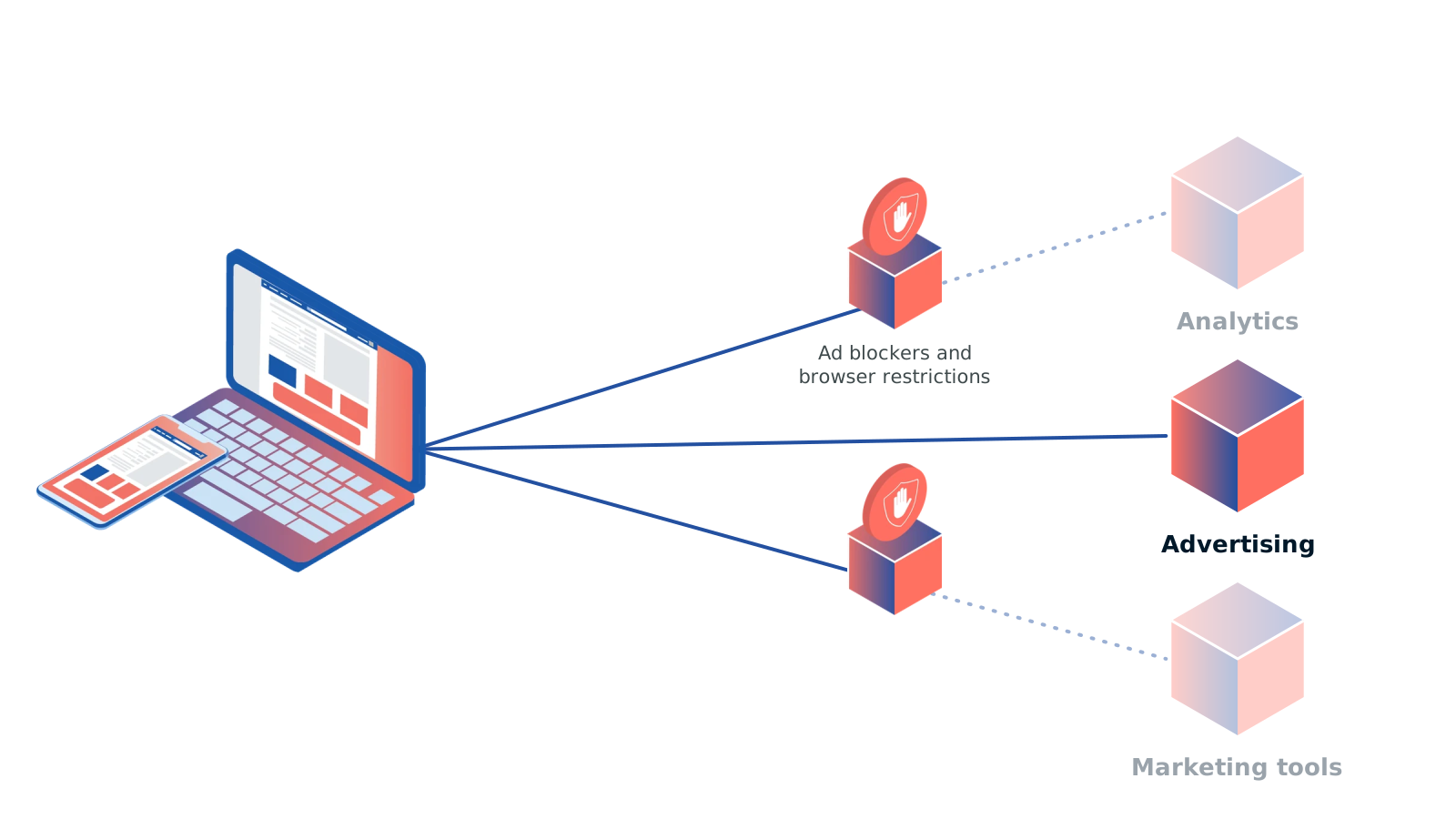
Server-side tagging gives you more control over the data you send to analytics and advertising platforms. It can also help reduce data lost to browser restrictions and ad blockers.
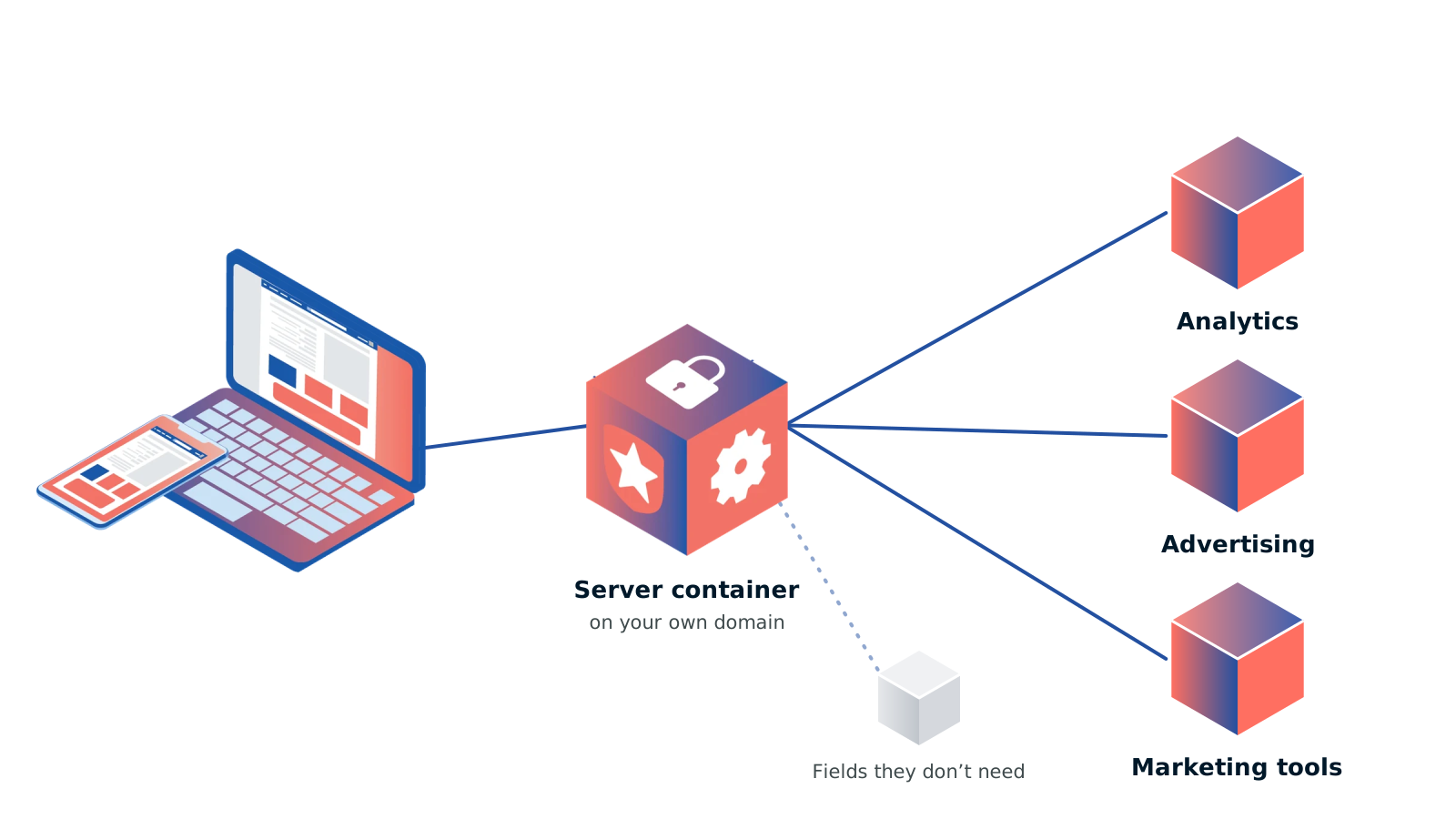
It does this by changing the route your measurement data takes. Instead of sending data directly from the browser to those platforms, it first passes through a server environment running through your own domain.
Cloud Nine Digital implements and manages server-side tagging for the majority of its clients. But it isn't automatically worth doing. The benefits need to justify the additional infrastructure and cost.

A selection of our clients
What does server-side tagging actually deliver?
With traditional browser-based tagging, measurement requests travel directly from the user's browser to analytics and advertising platforms. Server-side tagging puts your own server environment in between.
That extra step gives you more control. Before data reaches a platform, you can determine which fields are sent and remove information the platform does not need.
It can also help more measurement data reach its destination, but how much depends on your existing tracking, consent setup, browser behaviour and the platforms involved. Some ad blockers recognise server-side endpoints too, and Safari limits cookies set by a server whose IP address doesn't match your website. So it reduces data loss; it doesn't end it.
Your server looks healthy. Meta is still rejecting your checkouts.
In one setup we monitor, uptime and response times were normal. Meanwhile Meta rejected every checkout event because the currency was missing, and TikTok never received a single add-to-cart. Without alerts on what each platform sends back, that goes unnoticed for weeks.
For setups on Google Cloud, our server-side monitor checks every platform's response alongside uptime and response time, and sends a health summary every morning. We can give you a better idea of whether server-side tagging is right for you.
What does a server-side setup cost per month to run?
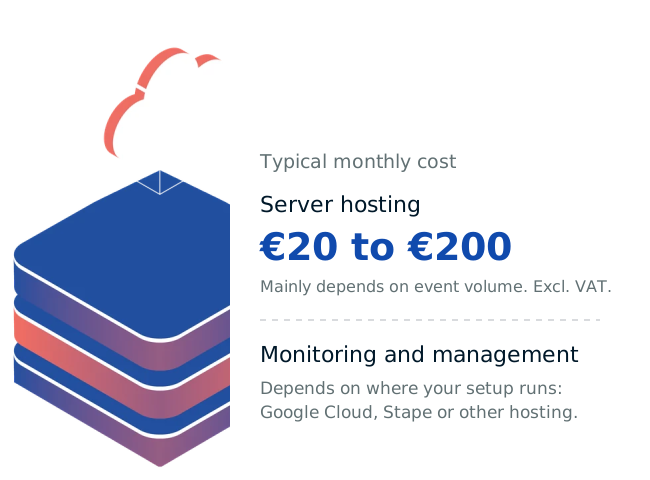
Server-side tagging isn't a one-off implementation. The server environment has to run continuously, process incoming requests, and be monitored and maintained as your measurement setup changes.
Expect hosting costs of roughly €20 to €200 a month, depending mainly on event volume. Monitoring and management come on top, and depend on where your setup runs.
Most setups run on Stape, a managed service, or in your own Google Cloud project. Either way the server sits on a subdomain of your own website, such as sst.yourdomain.com, so the data stays first-party.
For a low-traffic website with a simple analytics setup, the additional infrastructure and management may cost more than the improvement is worth.
If the numbers do not make sense, neither does the implementation.
Server-side tagging changes the route of your data. The consent rules stay the same.
A server container does not remove consent requirements. If a user has not consented to a particular type of data collection, moving that collection from the browser to a server does not change the user's choice.
Server-side tagging still needs to respect the consent choices made by the user.
If your consent setup is incomplete or unreliable, fix that first. We wire Consent Mode before we add a single server-side destination, and roll out in stages: analytics first, then the ad platforms.
Is server-side tagging a way to work around consent?
No.
When is server-side tagging not worth doing?
Server-side tagging adds infrastructure, maintenance, and another technical layer to your measurement setup. We only recommend adding that complexity when there is a clear benefit.
Before recommending it, we look at your existing collection setup, traffic, measurement loss, consent, infrastructure, and business requirement
Low traffic
For lower-traffic websites, the additional measurement data may not justify the running costs. As a guide, server-side tagging may not be worthwhile below [confirmed traffic threshold].*
A measurement setup that needs fixing
We won't move a bad measurement setup onto a server and call it an improvement. Poorly defined events, incorrectly configured tags, and an unreliable data layer need fixing first.
Consent that isn't working
The same goes for consent. If that isn't working properly, server-side tagging isn't the next job.
If there's a strong case, we implement and manage the server environment and monitor it as platforms and measurement requirements change. If there isn't, we'll tell you.
Is server-side tagging worth it for you?
We look at your traffic, measurement loss and consent setup, and tell you whether the numbers add up.
Related Services
Data Collection
Define what needs to be measured and build a collection setup that reflects what is actually happening.
Consent management
Manage consent choices and ensure your measurement setup responds to them correctly.
Read morePlatform Management
Maintain and manage the analytics and marketing platforms connected to your measurement setup
Contact details
Cloud Nine Digital
Johann Siegerstraat 24
1096 BH
Amsterdam, Netherlands
T: +3120 787 01 97
E: info@cloudninedigital.nl
Need something else?
Please do reach out. We are happy to help!